There are moments when the world shows you something. A movement in the grass. A shift in the air. A pattern in how one life responds to another. You stay with it — not to analyse, but because something in you wants to keep watching. And when you do, something stays. A kind of privilege — having truly seen.
There are places where these patterns still hold. Where a silverback settles his family with a glance. Where two million animals cross a river because rain fell somewhere else three months ago. Where a mother orangutan teaches her infant the routes through the canopy — the same knowledge passed down for thousands of generations. Where evolution itself is visible in the shape of a beak, the ritual of a courtship dance, the behaviour of a species found nowhere else on earth.
The pace of these journeys lets you take it all in — slowly, fully. You absorb more than you see. There is awe in that.
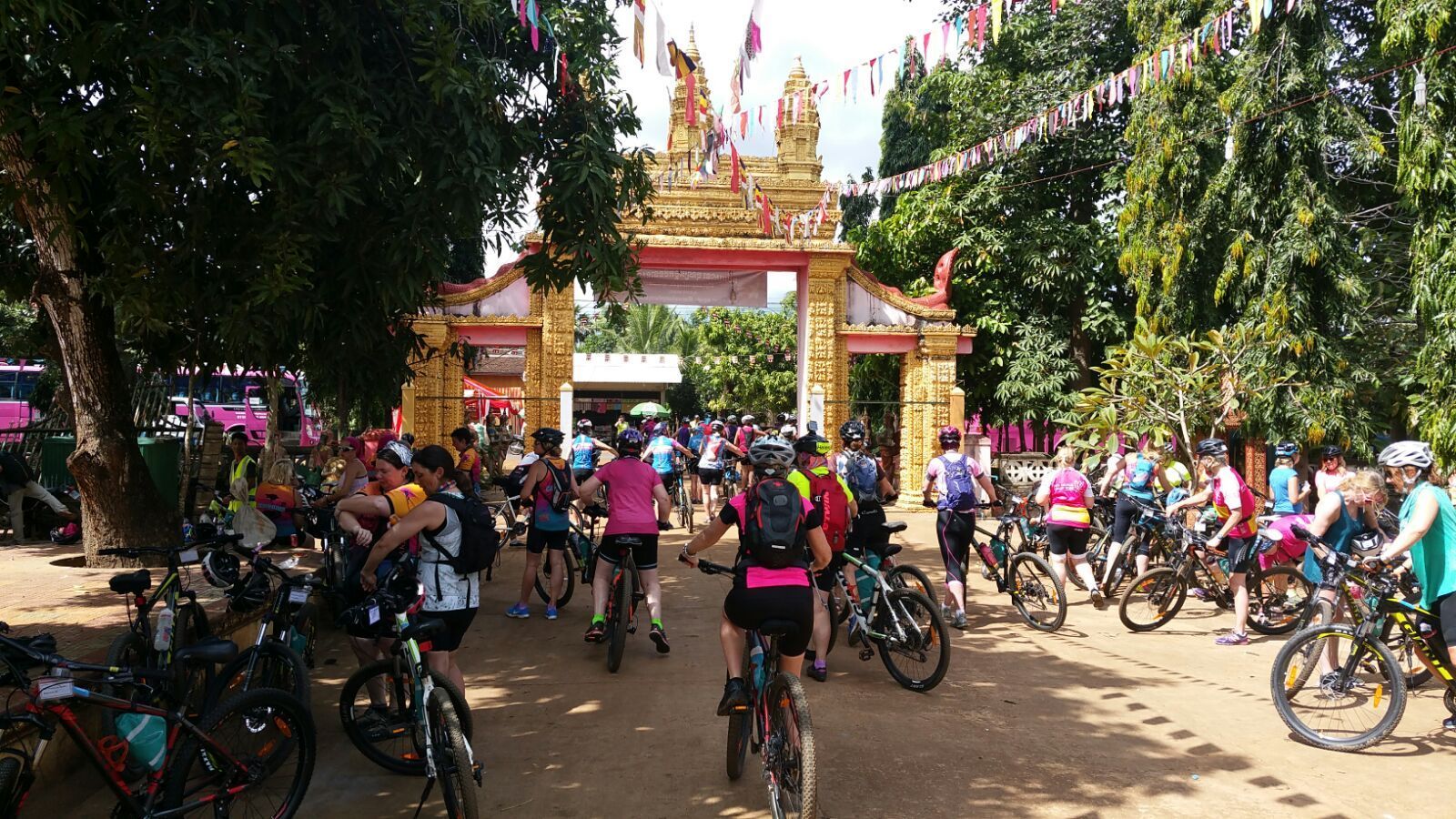
A charity challenge brings you closer to it than ordinary travel ever could. You arrive slowly, on foot or by wheel, with effort. You are not passing through — you are inside it. And the world opens differently when you arrive that way.
What the world shows those who stay.
A gorilla family at rest. The juveniles wrestle. The mothers feed nearby, watchful. The silverback sits at the centre — his glance enough to settle a dispute, his presence enough to hold the structure. You stay with them for an hour. In that hour, you read the hierarchy, the bonds, the care passing between them. You recognise something ancient and familiar.
A river crossing in the Mara. The wildebeest hesitate at the bank. The crocodiles wait below. The first animal jumps, and then the calculation breaks — thousands follow, the water churning, survival and loss happening together. You hold the whole system in view: rain, grass, herbivore, predator, scavenger. Everything connected. Everything visible.
When you witness these encounters, something stays. You don’t just see — you absorb. You carry it with you, and you are richer for it.
Twenty-five years of finding journeys where witnessing matters deeply.
We seek out places where close attention reveals something larger. These encounters grow rarer. The places that still hold them depend on those who visit with care — whose presence supports the communities protecting them.
The journeys require effort. Hours of trekking. Altitude. Humidity. Early mornings and long waits. The effort earns proximity. Arrival on foot opens encounters that cannot be had any other way.
Four places where the patterns hold:
Trek Galápagos
The islands where Darwin recognised the mechanism of life. Each island a variation. Each species shaped by specific pressures — food, climate, competition, time. The blue-footed booby performs its courtship dance, one foot raised then the other, the ritual unchanged for thousands of generations. Giant tortoises move at the pace they have always kept. Marine iguanas feed in ways found nowhere else, their bodies shaped precisely by the demands of this archipelago.
The animals continue as if you were not there. You are inside the system, watching it reveal itself — the same revelations Darwin carried home, still unfolding.
For those who want to see evolution made visible.

Trek Gorillas Uganda
Fewer than 1,100 mountain gorillas remain. The trek takes hours through dense forest — steep, humid, the outcome uncertain. The encounter lasts perhaps sixty minutes. A family feeding, resting, moving together. The silverback watchful. Juveniles testing boundaries. An infant learning to climb, corrected gently by its mother. Every gesture legible — hierarchy, protection, teaching, play.
Eyes meet yours. Something passes between species that you will understand more fully in the months that follow. You have witnessed kinship in its oldest form, in a population that nearly vanished and still might.
For those who want to see what kinship looks like when everything depends on it.

Trek Maasai Mara
The great migration. Two million wildebeest following rain that fell months ago, crossing land they have crossed for two million years. The river churns with the crossing — the calculation, the chaos, the crocodiles below. Lions watch the edges. Vultures circle above, reading the scene. The system is complete and visible: rain, grass, herbivore, predator, scavenger. Each part dependent on every other.
You walk where the Maasai walk. The scale stretches to the horizon. Everything connected. Everything doing what it has always done.
For those who want to hold a complete system in view.

Trek Borneo
Rainforest 130 million years old, surviving in fragments. Orangutans move through the canopy — a mother teaching her infant the routes, the grips, the choices. The same knowledge transferred across countless generations. Hornbills call above, their role in seed dispersal holding the forest together. Pitcher plants and orchids in partnerships with insects that took millions of years to form.
You trek through one of the oldest ecosystems on earth. The green is absolute. The relationships are everywhere — between species, between canopy layers, between the forest and the rain it generates. A living network, still intact.
For those who want to see how a living system holds together.